SONS OF DEWITT COLONY TEXAS
© 2000-2026,
Wallace L. McKeehan, All Rights Reserved
Lake Weir High Class
of 62---Index
The following is reprint
of a story written by Al Burt, longtime
Miami Herald journalist who wrote about the disappearing old Florida "cracker"
culture. The story is set in the Lake Weir area and is about the mother, Tennie
Steele, and boyhood home of '62 graduate Rayburn Steele on the Starke's Ferry Bridge, Hwy
42 over the Ocklawaha River across from Nelson's Fish Camp (boyhood home of Jimmy Hunt,
Class of '61).
An Old Crank
When a boat whistled, Tennie Steele put down her crocheting and went to
work. She walked out to the middle of Starkes Ferry Bridge, inserted a long handle into a
slot and began cranking. "Hard?" she said. "You ought to try it. Sometimes
that thing is impossible." But the short, trim grandmother leaned into the job, and
slowly the bridge swung open and cleared the channel.
The widow Steele, when I talked with her in 1978, had been a
bridgetender for 18 years on one of the relics of Florida's transportation system—a
manually operated swing bridge across the Ocklawaha River where it met State Road 42 in
Marion County. All that time she had lived in a white frame bridgetender's house that
perched behind the guardrails on what amounted to an island. She could fish off the back
porch. Her best memories were made right there at this site of an old ferry-crossing that
served Confederate major Thomas Starke's plantation in the 1880’s. As permanently as
a human can, she built her life around the river. Her husband, who died in 1969, planted
lemon and tangerine trees along the banks, and each year they were full of fruit. She
planted roses. Her children grew up in this tiny six-room house where she finally lived
alone.
"Lord, I love this river, and I hate to leave it," she said.
"But they're going to tear down my house." Mrs. Steele knew the old hand-cranked
bridge could not last forever. Nevertheless, she had been stunned the previous spring when
state officials said she could stay no longer than six months more, perhaps less. Plans
called for a high-level bridge that would not need a tender, and until that got built the
state would depend on nonresident tenders working reduced hours. In a nation of
easy-riding nomads, where people regularly move from job to job and city to city and mate
to mate, she believed in the old rule that a person should make lasting commitments to
achieve the sense of direction that makes life bearable. "There'll always be
changes," she said, mentally picking her path into the future. "Life changes
whether you want it to or not. But you can find a way and a reason. One thing leads out of
another. I'm thankful I could carry on as long as I did. I was 65 this year, and I can get
retirement. They offered to move the house for me but I told them no. The place is full of
termites. I'll miss the fishing, but it seemed like they were always biting best when I
had to work and couldn't take out the boat. "Besides, that old crank is so hard
to turn. I don't dread leaving as bad because of that. I'll just move on up to Anthony
[also in Marion County], where my son lives, and I'll be fine. I can sew and raise flowers
and maybe go fishing occasionally. I'll have plenty to do, just like I always have."
The Steeles made their way to Starkes Ferry from Alabama in 1953.
"We were farmers," she said. "We never did public work." In 1960 a
friend recommended her, and she readily took the job and the little state-owned house that
went with it. "Made $65 a week to start. Paid $25 a month rent and they furnished
utilities," she said. "It was six days a week and 24 hours a day then. Couldn't
even get away to go to school meetings. But I loved it. Just suited me fine. Sometimes a
month would pass without having to open the bridge—has to be a houseboat or something
like that. But sometimes two or three'd come in one weekend. It wasn't too difficult, but
you had to be alert." Starkes Ferry, a rural community between Umatilla and
Weirsdale, changed little in Mrs. Steele's 18 years there. The same two fish camps sat on
either side of the river, but they got a little busier and a little fancier. There were
fewer campsites and trailers in the early days, but even in 1978 there were not so many.
Her salary rose to $600 a month and work time fell to three-and-a-half days a week (42
hours), with a relief bridgetender (also a woman) handling an equal shift from a small
office next door.
Most of the boat traffic could go under the bridge without her
services, but the highway traffic had increased. Barely a yard from her front door the
autos whizzed by in two opposite-bound lanes closely bordered by heavy guardrails which
she could reach from her front door. "The traffic gets to be a problem," she
said. "Once, a truck loaded with oranges hit the house. Cleaned out all but the top
and bottom of two rooms, furniture and all. Scattered oranges all over the house. I was
outside fishing. "Another time my grandson was here and we had been fishing. I was
out on the back porch cleaning the fish when he came back and said, 'Granny, a box of corn
fell off a truck on the road'. I looked out there, and a trailer had hit one of the
guardrails and scattered corn all over everywhere. All that went with the job. I had to
keep the road clear. You'd be surprised how many people stopped their cars right on the
bridge to look at the alligators—we've got a 14-footer that hangs around out
there—or to climb down that fence and pick some of my tangerines. Had to keep 'em
moving."
She sat quietly in her living room, listening to the pendulum clock
ticking, looking at a mounted bass on the kitchen wall, the framed pictures of her
grandchildren and the curtains standing out in the river breeze, and sighed. "It
wasn't perfect but Lord knows I'm going to miss it," she said. "If I didn't have
another place to go, I'd put me a trailer down there on the river and stay right on."
One of Florida's last hand-cranked bridges was passing into history.
Tennie Steele followed reluctantly, for she was leaving a life behind.
May 21, 1978 by Al Burt, reprinted in The Tropic of Cracker (1999),
University of Florida Press. |
Music from Big Ape (WAPE
Jacksonville)
"I was so much older then, I'm younger than that now."--From
Bob Dylan's My Back Pages
News, area visits and nostalgic
experiences, anecdotes of general interest to theme of the website is solicited.
Submissions will be potentially used as Featured Articles here on the
homepage. See News Archive for past features.
May You Stay Forever Young
Bob Dylan in Concert at age 63
May God bless and keep you always,
May your wishes all come true,
May you always do for others
And let others do for you.May you build a ladder to the stars
And climb on every rung,
May you stay forever young,
Forever young, forever young,
May you stay forever young.
May you grow up to be righteous,
May you grow up to be true,
May you always know the truth
And see the lights surrounding you.
|
May you always be courageous,
Stand upright and be strong,
May you stay forever young,
Forever young, forever young,
May you stay forever young.May your hands always be busy,
May your feet always be swift,
May you have a strong foundation
When the winds of changes shift.
May your heart always be joyful,
May your song always be sung,
May you stay forever young,
Forever young, forever young,
May you stay forever young. |
The classes of the early 60's
were the favorites of my teaching career--Mr. George Cope 2000
Lake Weir High School Class of 1962
Marion County, Florida |
Class Motto: Not for Ourselves, But Others
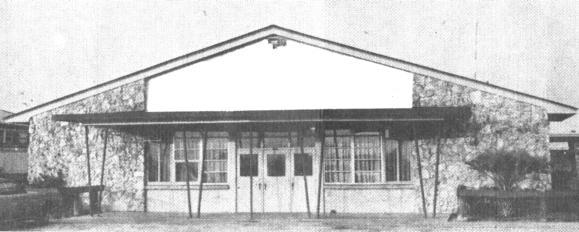
Capsule History of Lake Weir High School
by Arvid Nelson 1995
Lake Weir High School was built in a central location to receive
students from Weirsdale High School and Summerfield High School. The new high school was
built on a hill in Sunset Harbor overlooking Lake Weir. Mr.
Leo Armstrong was the first principle, coming from Weirsdale High
School. The first classes started in September 1955. The high school included grades 7
thru 12 and had about 300 students total. The high school played six-man football. The
Class of 1956, the first graduating class, had 33 graduates. Lake Weir High School
students came from the elementary schools at Belleview, Summerfield and Weirsdale. These
schools in turn served the communities of Belleview, Candler, East Lake Weir, Ocklawaha,
Pedro, Summerfield, Sunset Harbor, Weirsdale and the outlying reaches of southern Marion
County.
Marion county had a pretty stable population. Even so, between 1950 and
1962 many students moved into and out of our schools. This brief history will remind
many alumni and enlighten other alumni of the histories of our schools. Weirsdale
School opened its doors about 1923 and included grades 1 thru 12. Children came from East
Lake Weir, Weirsdale and the surrounding areas. In 1955, with the opening of the new Lake
Weir High School, the school became Weirsdale Elementary School with grades 1 thru 6. Mr.
Leo Armstrong, the principle, moved to the new Lake Weir High School. The school house
buildings still stand but are currently empty.
Summerfield School opened its doors in September 1925 and included
grades 1 thru 12. Children came, from Pedro, Sunset Harbor, Summerfield and the
surrounding areas. In 1955, with the opening of the new Lake Weir High School, the school
became Summerfield Elementary School with grades 1 thru 6. The principle at Summerfield
Elementary School in 1955 was George L. Holder. The school was closed when the Belleview
and Summerfield school districts were combined and all students went to the new Belleview
Elementary School. The old school building still stands and it is currently used as a
storage facility.
Belleview School was opened about September 1928 and included grades 1
thru 8. Students graduating from Belleview went on to either Ocala High School or
Summerfield High School. In 1955, with the opening of the new Lake Weir High School, the
school became Belleview Elementary School, grades 1 thru 6. Mr. George L. Holder was the
principle. A new elementary school was constructed on Highway 484 on the western outskirts
of town to service the Summerfield and Belleview school districts. The original Belleview
School is currently occupied by the City of Belleview. Ocklawaha School was open
about September 1928 and included grades 1 thru 8. Students graduating from Ocklawaha went
on to Weirsdale High School. I have not been able to determine when the school building
was closed. The original school house still stands but is vacant. In 1967 the Marion
County School District changed to the middle school concept and Lake Weir High School was
changed from grades 7 thru 12 to include only grades 9 thru 12. In August, 1975, a new
Lake Weir High School was constructed on Merricamp Road in Candler. The enrollment was
1200+ students. The 1993 school year reflected almost 2500 students.
Southern Marion county has experienced a constantly increasing
population and a second high school was approved. The new Belleview High School will open
its doors to students in August 1995. What we knew as Lake Weir High School
designated Lake Weir Middle School in August 1975 and included grades 6 thru 8. The 1993
school year reflected about 1300 students at Lake Weir Middle School.
When we graduated in 1962 Lake Weir High School had less than 450
students in grades 7 thru 12. There were 45 alumni pictured in our yearbook but there were
50 students in our senior class.
Yes, there have been many changes in the system and many additions to
the school and facilities but those of you, who visit "the top-of the hill" will
recognize many familiar things on the old campus. The south Marion county area has
changed quite a bit since 1962. What used to be a rural country-side with many citrus
groves, farms, cattle ranches and some retail is now a more populated urban environment
with tourism, many retirees, light industry and retail. Those classmates who have not been
back to the area in many years might be awestruck at the changes that have taken place.
Those classmates that still reside in the area enjoy some familiarity and a somewhat
relaxed pace of living we all remember from our high school days.
The Class of '62 is interested in information,
updates, anecdotes, history from anyone who attended
or taught at the old school on the hill from 1955-1975.
Class of 1962 Officers
Glenn Herbert---President, Don Phillips---Vice-President
Sandra Beck---Secretary, Karolyn Kirkland---Treasurer
Favorites
Mr. & Miss Senior--Wallace McKeehan and Karolyn Kirkland
Personality Plus--Linda Slade and Teddy Hayes
Cutest--Sandra Beck and Sammy Stormant
Most Popular--Sandra Beck and Don Phillips
Class Clown--Manuel Rodriquez
Friendliest--Beverly McNely and Perry Jacobs
Most Likely to Succeed--Rochelle Marrinan and Wallace McKeehan
Best All-Around--Karolyn Kirkland and Wallace McKeehan
Most Athletic--Don Phillips
Student Council Officers
President--Wallace McKeehan
Vice-President Wayne Baxley
Secretary Eloise Beck
Treasurer Glenn Herbert
Parliamentarian Juddy Smith
President's Message
The treasures of the past year are pages of history, but the wisdom we have
gained in these halls live on with us. An unwritten page, an untraveled road lies
ahead. How this page will read, where this road leads, and what we will find along
the way depends on us. May the success always outshine the failures in your future.
May your hours and achievements here stand as a monument throughout your role as an
American citizen.
Faculty 1962
Leo Armstrong, Principal
Donald Kearsley, Asst. Principal, Business
Bea Atkinson, Social Studies
Margie Austin, English
Barbara Bachman, Social Studies
Charles Chafin, Science
George Cope, Math
Gene Cowan, Social Studies & Coach
Julia Dowdy, Librarian
Murray Fugate, Math & Coach |
Isabel Hines, Homemaking
Michael Holahan, Spanish
Lida Holden, English
Dean Kells, Band
Myrle McLeod, Business
Tom Paul, Biology
J. M. Pfiel, Phys. Ed.
William Scruggs, Agriculture
Jean Smith, Phys. Ed.
Jim Smith, Science |
'62 Annual Pictures
Class of '62 in 1959 Freshman
SONS OF DEWITT COLONY TEXAS
© 2000-2026, Wallace L.
McKeehan, All Rights Reserved |